Invited Speakers
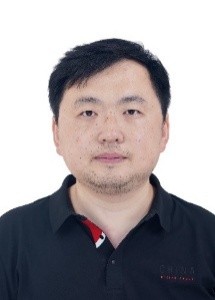
Professor. Li Sun,
Southeast University, China
Li Sun, IEEE Senior Member, received the PhD degree from Tsinghua University in 2017. He is currently the Youth Chair Professor in the School of Energy and Environment at Southeast University, Nanjing, China. He was a Visiting Associate Professor in Cornell University since 2019 to 2020. He is mainly engaged in the research of dynamics and control of energy systems with thermal and hydrogen components. He has led over 30 national and enterprise commissioned research projects with more than 20 million CNY, and authored 1 book and more than 120 referred journal papers with more than 5000 citations. He was listed in the Stanford's top 2% top scientists in the world. He is the Chair of IFAC TC 6.3A on Power Systems and Power Electronics and Vice Chair of the Working Group of IEEE Standard P3464 and (guest) editors of renowned journals like Energy, Renewable Energy, and Control Engineering Practice. He is appointed as the Publishing Ethics Advisor for Elsevier in 2027. He was awarded the National-level Youth Talent Fellowship of China in 2023 and Jiangsu Province Outstanding Young Scholars Fund in 2024. As the leading scientist, he won the First Prize of China Electric Power Science and Technology Award and the Second Prize of Jiangsu Province Science and Technology Progress Award, for contributions to the coordinated control of electricity and heat integrated energy systems.
Title: The Role of Thermal Inertia in Improving the Flexibility of Power Grid with High Renewable Penetration
Abstract: Thermal inertia widely exists in the power systems, such as the thermal power generation in the source side and the heat pump applications in the load side. These thermal inertia is usually caused by the slow dynamics of the temperature and pressure of working fluid such as water/steam, air or refrigerant within a limited volume. This talk will discuss the potential of utilizing the thermal inertia to help smooth the fluctuation of renewable energy and thus improve the flexibility of the power grid. However, the inertia of different thermal components exhibit different time-scale dynamics and requires cautious control design. This talk begins with the dynamic modelling and analysis methods. Several uncertainty compensation based control methods are proposed for different thermal processes, including Economic Model Predictive Control (EMPC) for the energy efficiency optimization of multivariable processes. To demonstrate the efficacy, some field applications of thermal inertia control are introduced in the cases like coal-fired power plant, building energy systems and cascaded heat pump systems for distributed steam generation in industry.

Professor. Dyah Erny Herwindiati,
Universitas Tarumanagara, Indonesia
Dyah Erny Herwindiati has been a Professor of Informatics Engineering at Tarumanagara University since 2014. She received her doctorate in Mathematics from the Bandung Institute of Technology (ITB) in 2006, where she wrote her dissertation on "A New Criterion of Robust Estimation for Location and Covariance Matrix and Its Application in Outlier Labeling." Dyah also serves as the Dean of the Faculty of Information Technology at Tarumanagara University in Jakarta, a role she has held since 2014 and will continue until 2027.
After completing her doctorate, she developed algorithms for processing satellite imagery and remote sensing data. Her contributions have enhanced the accuracy of data analysis across multiple fields.
She has worked as a Visiting Researcher in the Mathematics Department at the Conservatoire National des Arts et Métiers (CNAM) University in France and at Universiti Teknologi Malaysia (UTM) in Malaysia. Minister of Education Indonesia has recognized her expertise and contributions in Data Science by officially appointing her as a Full Professor. Her research has made a strong impact in several areas, especially in Machine Learning.
Title: Decline in Water Infiltration in the Ciliwung River Flow: Applications of Machine Learning and Environmental Impacts
Abstract: The Ciliwung River is a principal waterway in the Jakarta metropolitan area, extending approximately 124.1 km and encompassing a catchment area of about 370.8 km2. It serves as a critical water source for both West Java and Jakarta. Originating in the mountainous regions of Bogor Regency, such as Mount Gede, Pangrango, and Cisarua, the river flows northward to Jakarta Bay in the Java Sea. The Ciliwung River provides essential ecological and social services, including raw water supply, biodiversity support, and surface water flow regulation, highlighting its significance for regional sustainability.
Jakarta, Indonesia's economic and business center, has experienced substantial in-migration and rapid urbanization. By 2019, the population density reached 16,704 people per square kilometer, significantly surpassing the national average of 141.
The high cost of living in Jakarta has prompted many migrants to settle in surrounding buffer cities, with Bogor serving as a primary destination. Once characterized by its watershed and extensive green spaces, Bogor has experienced significant urban transformation. Consequently, the Ciliwung River, which originates in Bogor and flows through Depok, has been adversely affected by ongoing urbanization.
Intensive urbanization has converted sub-districts along the Ciliwung River from green spaces into built-up, impervious areas. This land-use change has reduced the region's water-catchment capacity and its ability to absorb and retain water, resulting in a significant decline in infiltration. The shift from pervious to impervious land cover presents considerable environmental challenges.
Decreased infiltration into the Ciliwung River has reduced the availability of clean water. This decline has led to increased groundwater extraction for domestic, commercial, and industrial use in Jakarta, resulting in significant land subsidence. Consequently, sea levels now exceed the land surface in some locations. In certain areas of Jakarta, land is subsiding by up to 11 cm per year, a rate much higher than global sea-level rise.
This research aims to analyze annual land cover changes in the Ciliwung River flow by classifying pervious, semi-pervious, impervious, and water body surfaces using Sentinel-2 satellite imagery. Additionally, it investigates the spatial and temporal distribution of infiltration across multiple sub-districts within the Ciliwung River area, utilizing land-cover mapping and data preparation to support subsequent machine learning modelling.
The study utilizes Copernicus Sentinel-2 Collection 1, equipped with the MultiSpectral Instrument Level-2A (MSI L2A), which provides satellite imagery across 13 spectral bands. These data are atmospherically corrected and require no further radiometric adjustment. The 10-meter spatial resolution constrains the detection of finer features. Sentinel-2 revisits the study area every five days.
Kernel Ridge Regression is an extension of Ridge Regression that incorporates L2 regularization to address multicollinearity in the data. By applying the kernel trick, data are mapped to a higher-dimensional feature space, enabling the capture of both linear and non-linear correlations. In this study, Kernel Ridge Regression is used to train classification models with ten predictor variables derived from Sentinel-2 spectral bands.
Model evaluation results indicate a precision of 97.42%, a recall of 97.39%, and an F1-score of 97.4%. These metrics demonstrate the model’s effectiveness in classifying data into predefined categories. The classification results were compared with true- and false-color composites to assess accuracy under actual field conditions. The comparison confirms that the model can distinguish between green land, built-up land, and water bodies.
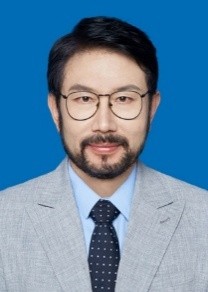
Professor. Jinlong Ma,
APEC Sustainable Energy Center, Tianjin University , China
Jinlong Ma is a Professor at Tianjin University, China, and Vice President of APEC Sustainable Energy Center (APSEC).
At APSEC, he is responsible for advisory and research programs; one of the main current research themes concerns energy transition solutions in APEC economies. Prior to the current role, Dr. Ma worked in many Asia and Pacific countries and held senior positions at renowned academic and research institutions, technical and advisory service organizations, and international energy corporations. His areas of expertise include energy system planning, renewables, power sector development, electricity market analysis, energy conservation and efficiency, urban energy, greenhouse gas inventory and emission abatement strategies.
Jinlong holds a PhD in Energy Economics from the University of Melbourne, an M.Eng. in Energy Policy and Planning from the Asian Institute of Technology, and a B.Eng. in Electrical Engineering from North China University of Electric Power. He serves as a Fellow of the Australian Institute of Energy (AIE), is a member of International Association of Energy Economics (IAEE) and the Institute of Electrical and Electronics Engineers (IEEE).
Title: Supporting green energy transition in medium- and small-sized towns
Abstract: The urbanization in counties is the driver of national demographic changes and is a salient characteristic of the China’s social and economic environment. Counties are in the primary position in the urbanization process, and with carbon emissions at the county-level accounting for more than 60% of national total in China, and a large proportion of counties’ economic activities, energy consumption, and carbon emission occur in SMTs, which places counties at the crux of the national green energy transition strategies. Promoting the transition toward clean energy in counties is crucial for achieving the national dual carbon goals. As an important link between rural areas and cities, the urban areas of counties, i.e., small and medium-sized towns (SMTs), are pivotal in defining the new urbanization trend, and implementing the national rural revitalization strategy. This presentation outlines a research initiative designed to facilitate the advancement of low-carbon energy systems within SMTs in China. The program encompasses the identification of country-specific characteristics, the selection of pilot projects, a thorough evaluation of the current energy infrastructure, and the optimization of energy systems to achieve low-carbon objectives. Accompanied by targeted policy recommendations, this research seeks to serve as a reference for ongoing energy transition initiatives in the counties in China, as well as in comparable administrative divisions across other developing nations in Asia and the Pacific.
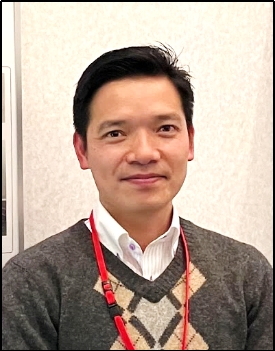
Asst. Prof. Trang Nakamoto,
Ritsumeikan University, Japan
Trang Nakamoto, born in Vietnam in 1986, is an assistant professor at Ritsumeikan University. He earned his B.Eng. from Hanoi University of Science and Technology in Vietnam (2009), followed by a Master’s degree from Dongguk University in South Korea (2011) and a Ph.D. from Ritsumeikan University in Japan (2014). After two years working in industry, he returned to academia in 2017 as a senior researcher at R-GIRO. His research focuses on the development of innovative biosensors powered by microbial fuel cell (MFC) technology. He is recognized for pioneering practical, low-cost MFC-based biosensors for critical applications in environmental monitoring and smart agriculture. With over 40 peer-reviewed publications and more than 50 international conference presentations, contributing significantly to the advancement of bio-electrochemical sensing technologies.
Title:Harnessing Microbial Fuel Cells for Biosensing Applications and Green Energy
Abstract:Microbial Fuel Cells (MFCs) offer a unique platform for both green energy generation and, more powerfully, self-powered biosensing. This presentation introduces advanced MFC-based biosensing technologies and highlights our research advancements in transforming microbial bio-electrochemistry into real-time, actionable data for environmental and agricultural monitoring, overcoming the cost and power limitations of traditional sensors.
Our research focuses on developing practical, MFC-based biosensors that leverage microbial metabolism to detect environmental changes. We will present case studies including floating sensors for tracking organic pollution in wastewater and portable devices for sensing soil water content in smart agriculture. A cornerstone of our work is sustainability; we have pioneered novel, low-cost electrodes derived from waste biomass like rice husks and loofah sponges. While these devices are powered by the green energy they generate from waste, their primary value lies in their function as autonomous sensors. Our work demonstrates a clear pathway toward developing intelligent, sustainable sensor networks for a smarter, greener future.

Dr. Shitikantha Dash,
National University of Singapore, Singapore
I am a post-doctoral research fellow at the National University of Singapore (NUS), Singapore. Here, I am working with Prof. Dipti Srinivasan's research group towards developing Singapore's largest V2G testbed. Prior to this, I worked as a research associate at the Indian Institute of Technology (IIT) Ropar, Rupnagar, India, under a CRG project sponsored by the Science and Engineering Research Board (SERB), New Delhi.
I completed my bachelor's at the Biju Patnaik University of Technology (BPUT), Odisha, India, in Electrical and Electronics Engineering, and my master's at the Center for Advanced Post Graduate Studies, BPUT, Rourkela, India, in Power System Engineering. Then I moved to the Indian Institute of Technology Ropar, Rupnagar, India, for my PhD program in the Department of Electrical Engineering under the supervision of Prof. Ranjana Sodhi from the EE department and Prof. Balwinder Sodhi from the CS department.
My primary research interest includes demand response, energy market, energy storage systems, distributed energy resources management, and residential load monitoring. When I am not doing research, you may find me at the pool table in staff launge. I also enjoy post-independence Odia literature and editing Odia Wikipedia.
Title: Profit-Aware EV Utilisation Model for Sustainable Smart Cities: Joint Optimisation over EV System, Power Grid System, and City Road Grid System
Abstract: A sustainable city requires a sustainable means of transportation. This ambition is leading towards higher penetration of electric vehicles (EVs) in our cities, in both the private and commercial sectors, putting an ever greater burden on the existing power grid. Modern deregulated power grids vary electricity tariffs from location to location and from time to time to compensate for any additional burden. In this paper, we propose a profit-aware solution to strategically manage the movements of EVs in the city to support the grid while exploiting these locational, time-varying prices. This work is divided into three parts: (M1) profit-aware charging location and optimal route selection, (M2) profit-aware charging and discharging location and optimal route selection, and (M2b) profit-aware charging and discharging location and optimal route selection considering demand-side flexibility. This work is tested on the MATLAB programming platform using the Gurobi optimisation solver. From the extensive case studies, it is found that M1 can yield profits up to 2 times greater than those of its competitors, whereas M2 can achieve profits up to 2.5 times higher and simultaneously provide substantial grid support. Additionally, the M2b extension makes M2 more efficient in terms of grid support.

Dr. Lintong Liu,
CNOOC Energy Economics Institute, China
Title: Technical Pathways, Cost-Effectiveness, and Policy Mechanisms of Sustainable Aviation Fuel: A Comprehensive Assessment of Singapore's Experience
Abstract: Against the backdrop of global energy transition and carbon neutrality goals, the aviation industry has emerged as a critical sector for emissions reduction due to its high energy consumption and carbon intensity. Sustainable Aviation Fuel (SAF) has gained increasing attention as a key decarbonization pathway in aviation, owing to its significant lifecycle emissions reduction potential and compatibility with existing infrastructure. As a global aviation hub, Singapore has made remarkable progress in SAF development by integrating policy support, technological deployment, and market mechanisms. This paper systematically reviews the current state of SAF in Singapore, analyzing its industry layout, technological pathways, policy design, and international cooperation. A comparative analysis is conducted to draw implications for China's SAF development. The study finds that China can accelerate SAF industrialization and enhance international competitiveness by optimizing policy frameworks, upgrading technology systems, and deepening regional collaboration, thereby supporting its broader net-zero aviation goals. This paper combines a systematic literature review and case-study analysis with lifecycle assessment (LCA) and techno-economic modelling to generate quantitative policy simulation results that inform decision-making on regional SAF scaling pathways.